
Integrated River Basin Management Project Newsletter - Edition 12
PUBLICATION DATE:
Friday, November 13, 2026
PUBLICATION TYPE:
Magazines and Newsletters
STATUS:
Only Available Online
DESCRIPTION:
The third quarter of 2026 continued to strengthen regional cooperation, knowledge exchange, capacity development, and basin-level planning under the GEF/ UNDP/ASEAN Integrated River Basin Management (IRBM) Project. Activities brought together national and local government agencies, regional institutions, technical experts, and communities across the six participating ASEAN Member States. Highlights included the ASEAN Regional Forum on Innovations in River Basin Governance and Management, the Fourth Regional Steering Committee Meeting, consultations in the Nam Tha River Basin, regional training activities in Indonesia and Malaysia, and Technology Needs Assessment for food and biodegradable waste management in Pasac-Guagua Watershed in the Philippines. Selected follow-up developments through October are also included.
In July, the ASEAN Regional Forum on Innovations in River Basin Governance and Management discussed the key findings and recommendations from the regional assessment on river basin governance and management in the ASEAN region, drawing on basin-level experiences, institutional arrangements, and policy frameworks. Country-specific feedback and technical inputs will inform the refinement of the draft IRBM Guide for Improved Governance and Management and associated assessment templates.
Also in July, the Fourth Regional Steering Committee meeting, hosted by Lao PDR’s Department of Water Resources, Ministry of Agriculture and Environment, noted the implementation progress, lessons learned, challenges and next steps at the river basin, country and regional levels, as well as the proposed activities and budget for the remaining period of 2026. The meeting approved in principle the proposed 2027 Annual Work Plan and Budget, urged the Regional Project Management Unit, participating countries and project partners to complete the remaining Mid-Term Review management actions, and noted the request to expand the engagement of the ASEAN Working Group on Water Resources Management National Focal Points from the 11 ASEAN Member States. The meeting also launched the IRBM animated video on “Healthy River Basins Support Healthier Lives” and the State of River Basin Report of Nam Tha River Basin, which provides baseline information on biophysical, socioeconomic, and governance conditions of the basin.
In Lao PDR, the Project conducted site visits and consultations on pilot project development in the Nam Tha River Basin. Discussions identified priority issues such as forest encroachment, slash-and-burn activities, water security, and flooding, while also exploring opportunities to support local livelihoods. Among the pilot projects identified include upstream protection for water supply in Pak Tha District, Bokeo Province; livelihood development in Nam Ngan Village, Luang Namtha Province; and updating the Action Plan for the Agriculture Research and Extension Center in Oudomxay Province.
In the Philippines, consultations on pilot project development continue to move forward. In Imus-Ylang Ylang-Rio Grande Rivers (IYRR) in Cavite, discussions on financing options for a proposed Septage Treatment Facility particularly the eligibility and application requirements for Amadeo Municipality to avail of the subsidy from the Department of Public Works and Highways’ National Sewerage and Septage Management Program (NSSMP) were conducted. As part of the application requirements for the NSSMP, the Project will support the updating of the feasibility study on septage management in Amadeo Municipality under the guidance of the IYRR Water Quality Management Area Governing Board and in coordination with the IYRR WQMA Secretariat and Cavite’s Office of the Provincial Environment and Natural Resources Officer. In Pasac-Guagua Watershed (PGW), the Project has conducted Technology Needs Assessment (TNA) for food and biodegradable waste following its presentation at the Third Quarter Pampanga Provincial Solid Waste Management Board Meeting where the board were briefed on the scope, objectives, and expected outputs from the TNA of the PGW, and agreed on the schedule for the site visits in the 10 municipalities as part of the assessment. In October, the Project conducted a series of fieldwork in these municipalities to assess waste generation, composition, disposal, and management. Findings will inform technical recommendations for viable technological options for food and biodegradable waste management.
In August, the Project organized the Regional Workshop on Environmental Monitoring and Reporting in Depok City, Indonesia where participants from the six participating ASEAN Member States, examined the monitoring practices and reporting needs across seven priority river basins. Sessions covered indicator selection, monitoring design, data interpretation, and reporting, and introduced the Freshwater Health Index for consideration in the State of River Basin (SoRB) reporting. Findings will inform the refinement of the draft regional Guide on Environmental Monitoring and Reporting to support SoRB reporting and IRBM planning.
From September to October, the Project conducted the Regional Integrated River Basin Management Training of Trainers in Kuala Lumpur, Malaysia, to pilot-test and validate the draft IRBM Training Manual and Facilitator Guide. It brought together national and local government representatives, members of the PEMSEA Network of Learning Centers and PEMSEA Network of Local Governments, and university partners to review the training materials, practice facilitation and training techniques and strengthen their capacity to deliver IRBM training in their respective countries. Participatory sessions and site visits demonstrated practical approaches to basin governance and community engagement.
The regional and basin level activities provided opportunities to identify key elements of IRBM governance and management in consideration of national and basin level priorities and contexts; the requirements for monitoring and reporting of progress, and the training needs and tools to enhance IRBM capacity and learning. Consultations on pilot project development in Lao PDR and the Philippines confirmed the focus and possible partnership arrangements. The Project will build on these developments and implement the agreed actions to deliver on its objectives of establishing functional IRBM mechanisms and managing the identified alterations to the Source-to-Sea flows in the priority river basins.
RELATED PUBLICATIONS
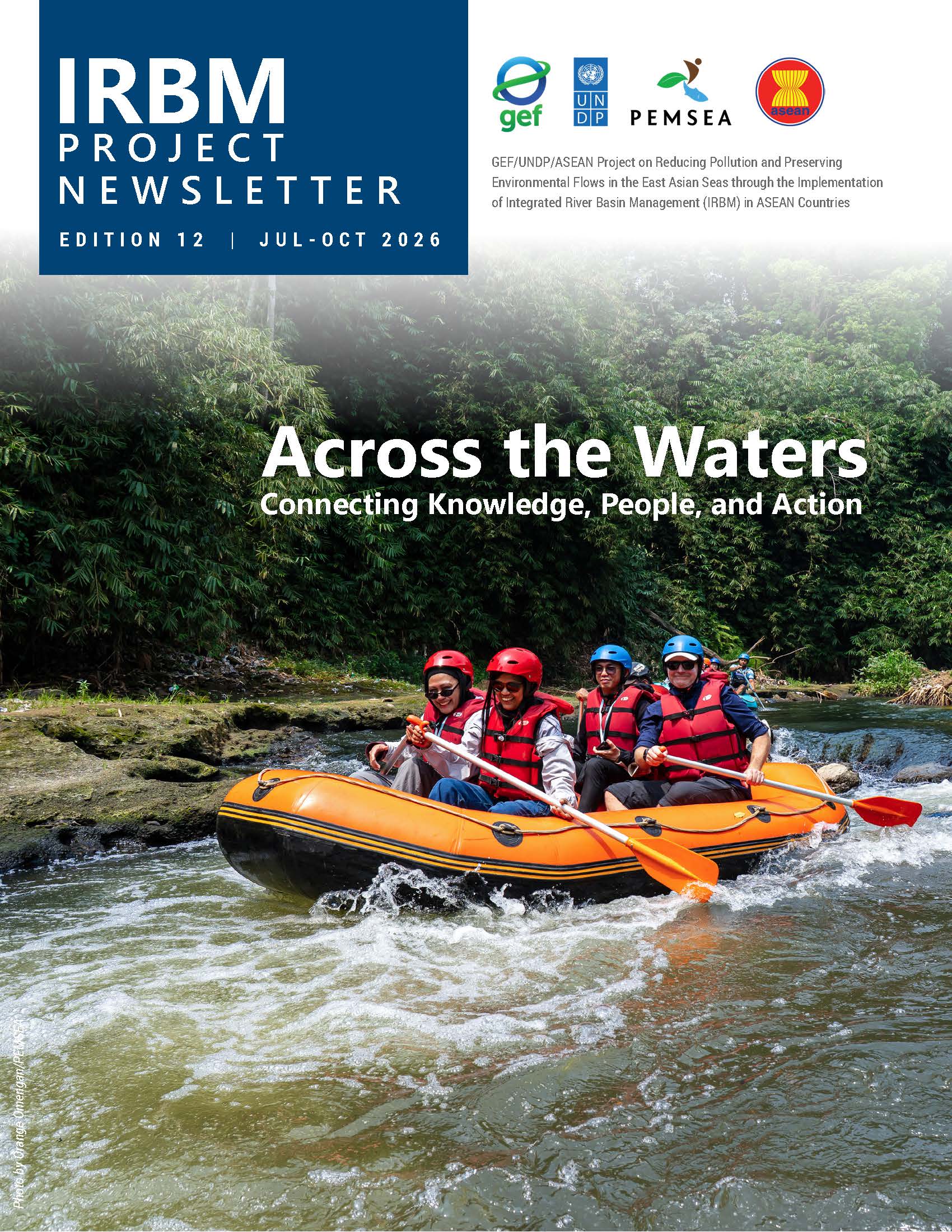
Integrated River Basin Management Project Newsletter - Edition 12
The third quarter of 2026 continued to strengthen regional cooperation, knowledge exchange, capacity development, and basin-level planning under the GEF/ UNDP/ASEAN Integrated River Basin Management (IRBM) Project. Activities brought together national and local government agencies, regional institutions, technical experts, and communities across the six participating ASEAN Member States. Highlights included the ASEAN Regional Forum on Innovations in River Basin Governance and Management, the Fourth Regional Steering Committee Meeting, consultations in the Nam Tha River Basin, regional training activities in Indonesia and Malaysia, and Technology Needs Assessment for food and biodegradable waste management in Pasac-Guagua Watershed in the Philippines. Selected follow-up developments through October are also included.
In July, the ASEAN Regional Forum on Innovations in River Basin Governance and Management discussed the key findings and recommendations from the regional assessment on river basin governance and management in the ASEAN region, drawing on basin-level experiences, institutional arrangements, and policy frameworks. Country-specific feedback and technical inputs will inform the refinement of the draft IRBM Guide for Improved Governance and Management and associated assessment templates.
Also in July, the Fourth Regional Steering Committee meeting, hosted by Lao PDR’s Department of Water Resources, Ministry of Agriculture and Environment, noted the implementation progress, lessons learned, challenges and next steps at the river basin, country and regional levels, as well as the proposed activities and budget for the remaining period of 2026. The meeting approved in principle the proposed 2027 Annual Work Plan and Budget, urged the Regional Project Management Unit, participating countries and project partners to complete the remaining Mid-Term Review management actions, and noted the request to expand the engagement of the ASEAN Working Group on Water Resources Management National Focal Points from the 11 ASEAN Member States. The meeting also launched the IRBM animated video on “Healthy River Basins Support Healthier Lives” and the State of River Basin Report of Nam Tha River Basin, which provides baseline information on biophysical, socioeconomic, and governance conditions of the basin.
In Lao PDR, the Project conducted site visits and consultations on pilot project development in the Nam Tha River Basin. Discussions identified priority issues such as forest encroachment, slash-and-burn activities, water security, and flooding, while also exploring opportunities to support local livelihoods. Among the pilot projects identified include upstream protection for water supply in Pak Tha District, Bokeo Province; livelihood development in Nam Ngan Village, Luang Namtha Province; and updating the Action Plan for the Agriculture Research and Extension Center in Oudomxay Province.
In the Philippines, consultations on pilot project development continue to move forward. In Imus-Ylang Ylang-Rio Grande Rivers (IYRR) in Cavite, discussions on financing options for a proposed Septage Treatment Facility particularly the eligibility and application requirements for Amadeo Municipality to avail of the subsidy from the Department of Public Works and Highways’ National Sewerage and Septage Management Program (NSSMP) were conducted. As part of the application requirements for the NSSMP, the Project will support the updating of the feasibility study on septage management in Amadeo Municipality under the guidance of the IYRR Water Quality Management Area Governing Board and in coordination with the IYRR WQMA Secretariat and Cavite’s Office of the Provincial Environment and Natural Resources Officer. In Pasac-Guagua Watershed (PGW), the Project has conducted Technology Needs Assessment (TNA) for food and biodegradable waste following its presentation at the Third Quarter Pampanga Provincial Solid Waste Management Board Meeting where the board were briefed on the scope, objectives, and expected outputs from the TNA of the PGW, and agreed on the schedule for the site visits in the 10 municipalities as part of the assessment. In October, the Project conducted a series of fieldwork in these municipalities to assess waste generation, composition, disposal, and management. Findings will inform technical recommendations for viable technological options for food and biodegradable waste management.
In August, the Project organized the Regional Workshop on Environmental Monitoring and Reporting in Depok City, Indonesia where participants from the six participating ASEAN Member States, examined the monitoring practices and reporting needs across seven priority river basins. Sessions covered indicator selection, monitoring design, data interpretation, and reporting, and introduced the Freshwater Health Index for consideration in the State of River Basin (SoRB) reporting. Findings will inform the refinement of the draft regional Guide on Environmental Monitoring and Reporting to support SoRB reporting and IRBM planning.
From September to October, the Project conducted the Regional Integrated River Basin Management Training of Trainers in Kuala Lumpur, Malaysia, to pilot-test and validate the draft IRBM Training Manual and Facilitator Guide. It brought together national and local government representatives, members of the PEMSEA Network of Learning Centers and PEMSEA Network of Local Governments, and university partners to review the training materials, practice facilitation and training techniques and strengthen their capacity to deliver IRBM training in their respective countries. Participatory sessions and site visits demonstrated practical approaches to basin governance and community engagement.
The regional and basin level activities provided opportunities to identify key elements of IRBM governance and management in consideration of national and basin level priorities and contexts; the requirements for monitoring and reporting of progress, and the training needs and tools to enhance IRBM capacity and learning. Consultations on pilot project development in Lao PDR and the Philippines confirmed the focus and possible partnership arrangements. The Project will build on these developments and implement the agreed actions to deliver on its objectives of establishing functional IRBM mechanisms and managing the identified alterations to the Source-to-Sea flows in the priority river basins.
Proceedings of the 2026 PEMSEA Network of Local Governments (PNLG) Forum "Empowering Coastal Cities for a Blue Future"
The 2026 PEMSEA Network of Local Governments (PNLG) Forum, themed “Empowering Coastal Cities for a Blue Future,” was organized by the PEMSEA Network of Local Governments for Sustainable Coastal Development (PNLG), in collaboration with the PEMSEA Network of Learning Centers and the PEMSEA Resource Facility, and hosted by Busan Metropolitan City, Republic of Korea. The forum took place from September 8-10, 2026, at the Paradise Hotel Busan.
PEMSEA eBulletin - October 2026
From local solutions to international dialogues, October saw PEMSEA bringing coastal and ocean governance conversations to the forefront.
On the international stage, PEMSEA brought regional perspectives to the 11th International Waters Conference in Indonesia, the 2nd APEC Ocean Resilience Enhancement Conference, and Asia-Pacific Ocean Week 2026. Through these engagements, PEMSEA shared experiences and practical approaches to integrated coastal management, ocean resilience, and source-to-sea governance, contributing East Asian Seas perspectives to wider discussions on shared environmental challenges and regional cooperation.
At the regional level, the PEMSEA Executive Committee (EC) met online for the 36th EC Meeting to review institutional governance measures, discuss regional priorities, and look ahead to key Partnership milestones taking shape for 2027.
In the Philippines, PEMSEA continued to strengthen local partnerships through the PRICELESS Project and MOF/PEMSEA Marine Plastics ODA Project through continued collaboration with its partners and stakeholders.
Different platforms, shared priorities. This month, PEMSEA's engagements showed how regional experience can inform international conversations, how partnerships can shape collective priorities, and how cooperation can support solutions on the ground.
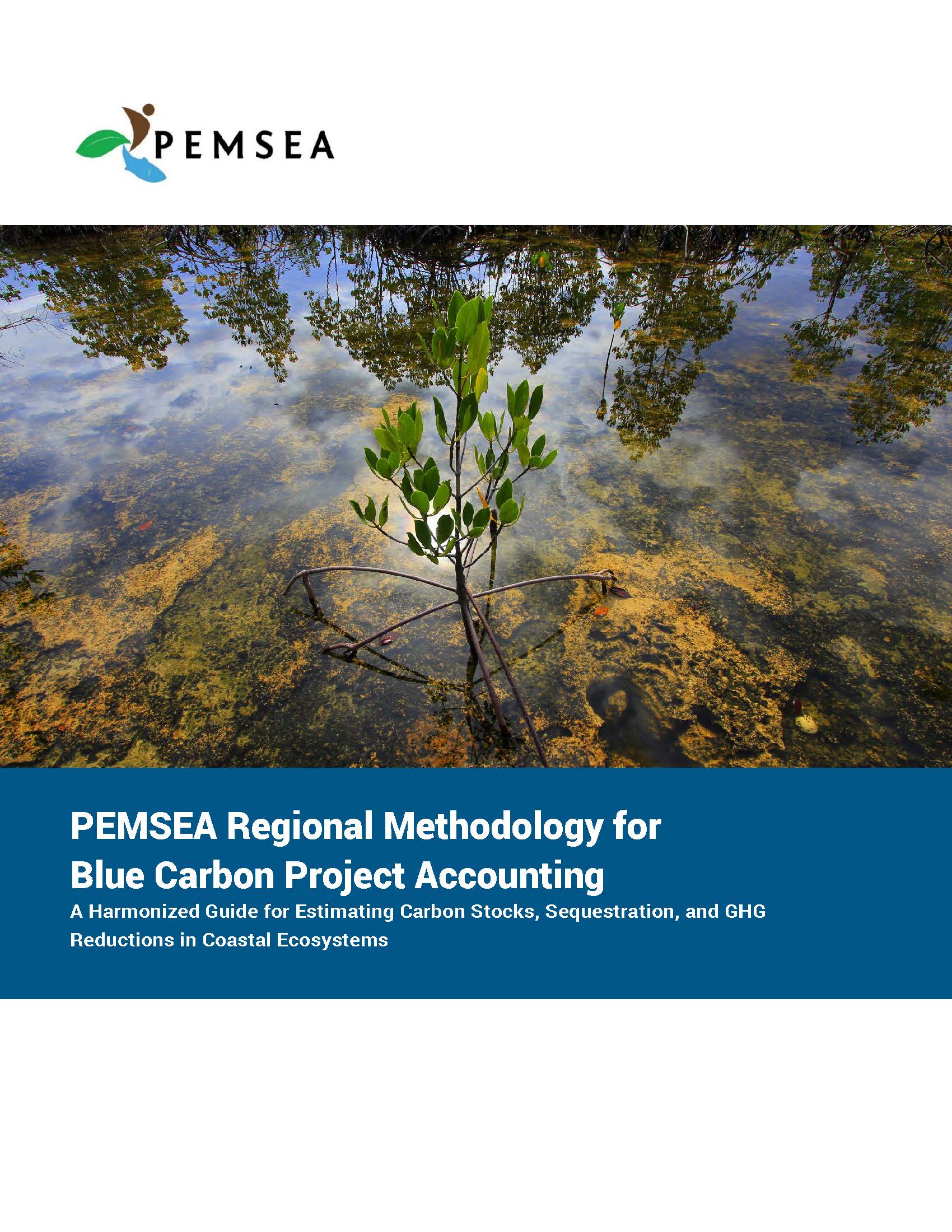
PEMSEA Regional Methodology for Blue Carbon Project Accounting
A Harmonized Guide for Estimating Carbon Stocks, Sequestration, and GHG Reductions in Coastal Ecosystems
Differences in measurement methods, carbon pool inclusion, and monitoring frameworks have made blue carbon projects in East Asia hard to compare. PEMSEA’s Regional Methodology addresses this with a single accounting framework for mangroves, seagrasses, and salt marshes. It is designed to be compatible with national greenhouse gas inventories and technically aligned with voluntary carbon credit certification requirements.
The Main Methodology sets out project eligibility and additionality, boundaries and stratification, baseline and project scenarios, uncertainty management, a tiering system, leakage, permanence and risk management, and monitoring, reporting, and verification. Five technical annexes provide the field and analytical detail:
- Annex A – Mangrove Ecosystems: carbon stock and sequestration assessment methods
- Annex B – Seagrass Ecosystems: carbon stock and sequestration assessment methods
- Annex C – Salt Marsh Ecosystems: carbon stock and sequestration assessment methods
- Annex D – Mapping Blue Carbon Ecosystems: remote sensing, validation, and change detection
- Annex E – Monitoring Environmental Parameters: the environmental conditions that influence blue carbon ecosystems
The methodology was prepared under the guidance of the Blue Carbon Technical Working Group of the EAS Partnership Council, with contributions from experts across the region. It is intended for project developers, national agencies, researchers, and verifiers working to bring high-integrity blue carbon projects to market.
INTERNATIONAL SEMINAR ON BLUE CARBON ECOSYSTEM VALUES: Accounting and Crediting Guidance Frameworks
The Korea Maritime Institute (KMI) and Partnerships in Environmental Management for the Seas of East Asia (PEMSEA) convened the International Seminar on Blue Carbon Ecosystem Values in Busan, Republic of Korea. The seminar gathered representatives from six East Asian countries, academic institutions, and regional partners to validate enhancements to the Regional Blue Carbon Accounting Protocol (RBCAP), review biodiversity accounting and crediting approaches, and define PEMSEA’s role in governance, verification, and market development. Key outcomes included expert recommendations to strengthen the RBCAP, shared insights on biodiversity crediting pathways, and a clearer vision of PEMSEA’s added value as a regional platform for advancing blue carbon and biodiversity markets.