
MOF/PEMSEA Marine Plastics ODA Project 2026 Intersessional Regional Steering Committee Meeting
The 2026 Intersessional Regional Steering Committee (RSC) Meeting of the MOF/PEMSEA ODA Project on Reducing Marine Plastics in the East Asian Seas Region was held on 2 July 2026 in PEMSEA Office and via Zoom. The objective of the meeting was to report the status of the procurement process for the pilot projects in the Philippines, to seek approval for changes in Dipolog City's pilot project design and budget and to provide an update on project implementation in Timor-Leste, including the hiring of consultants and the preparation of pilot project designs and the MEP Program in Dili, Manatuto, Liquica and Atauro.
The 2nd Intersessional RSC Meeting was a significant step to ensure that the pilot project implementation in the Philippines remains within the agreed timeline—as reported during the 3rd RSC Meeting—and to realign Dipolog City's design and budget to efficiently and effectively address the City's marine plastic issues. Specifically, this aims to urgently improve household waste collection and transport to material recovery facilities and the sanitary landfill.In addition, the meeting marked the start of the full implementation of the project in Timor-Leste, bolstered by added support through the hiring of the National Coordinator and National Technical Advisor. This will hasten coordination among the national and local governments, various stakeholders, and local communities.
The meeting was organized in hybrid format: at the conference room of PEMSEA Office which was chaired by Mr. Eddie Abugan, Division Chief, Project Management Division, FASPS, DENR, Philippines and through Zoom for the online participants.
Regional Training on the REWEFe Toolkit and WEFE Nexus Application in Southeast Asia
The GEF/UNDP/ASEAN Project on Reducing Pollution and Preserving Environmental Flows in the East Asian Seas through the Implementation of Integrated River Basin Management (IRBM) in ASEAN Countries through the Regional Project Management Unit (RPMU) of PEMSEA Resource Facility (PRF) organized a Regional Training on the Rapid Evaluation of the Water, Energy, Food and Ecosystem (REWEFe) Toolkit and Water, Energy, Food and Ecosystem (WEFE) Nexus Application in Southeast Asia on April 21-24, 2026 in Manila, Philippines, in collaboration with FutureWater.
The IRBM Project is being implemented by PRF and aims to establish functional IRBM mechanisms to reduce pollution, sustain freshwater environmental flows, and adapt to climate change across seven priority river basins in Cambodia, Indonesia, Lao PDR, Malaysia, Philippines, and Viet Nam.
The REWEFe toolkit was developed by FutureWater and tailored to meet the specific needs of the IRBM Project and the Southeast Asian region WEFE Nexus context. Following its successful demonstration in three priority river basins of the IRBM Project, a need for regional capacity building was identified to support broader uptake of the toolkit within sound IRBM governance processes. This training represented a key milestone in that capacity building effort.
PEMSEA Annual Report 2025: Midway Forward: Sustaining Momentum, Navigating Horizons
The year 2025 marks the midpoint of PEMSEA’s journey toward 2030. Appropriately titled Midway Forward: Sustaining Momentum, Navigating Horizons, this Annual Report provides an opportunity to reflect on progress achieved, celebrate key milestones, and reaffirm our commitment to advancing sustainable development across the East Asian Seas region.
Throughout 2025, the region continued to confront complex and interconnected challenges. Climate change, biodiversity loss, marine pollution, and increasing socio-economic pressures tested the resilience of institutions, communities, and governments. Yet these challenges also underscored the urgency and opportunity for transformative action. Through initiatives in sustainable fisheries management, blue carbon ecosystem restoration, integrated coastal management, river basin governance, including marine plastics pollution reduction. PEMSEA and its partners continued to advance practical solutions that strengthen coastal livelihoods, protect natural capital, and enhance resilience for future generations.
As PEMSEA sustains its momentum, it is also preparing for the next phase of its regional journey. Guided by the SDS-SEA Implementation Plan 2023–2027, the organization undertook strategic assessments to sharpen its direction toward 2030, strengthen institutional effectiveness, and advance financial sustainability through innovative and diversified resource mobilization. This year also marks a leadership transition, with a new Executive Committee assuming the responsibility of guiding PEMSEA through its next chapter of regional cooperation, innovation, and action.
The path forward will not be without challenges. Climate risks are intensifying, development pressures are increasing, and governance demands are becoming ever more complex. Yet PEMSEA remains steadfast in its commitment to fostering resilience, strengthening partnerships, and advancing sustainable development. As we move beyond the midpoint toward 2030, we will continue to scale innovative solutions, deepen collaboration, and place people and ecosystems at the heart of our efforts to build a more resilient, inclusive, and sustainable East Asian Seas region.
MOF/PEMSEA Marine Plastics ODA Project Second Regional Steering Committee Meeting
The Regional Steering Committee (RSC) meeting is the main decision making body of the Official Development Assistance (ODA) Project entitled “Reducing Marine Plastics in the East Asian Seas Region” comprised of the donor: the Government of Republic of Korea represented by the Ministry of Oceans and Fisheries (MOF), and the participating countries: the Philippines, represented by the Department of Natural Resources and Environment (DENR) and Timor-Leste, represented by the Ministry of Agriculture, Livestock, Fisheries and Forestry (MALFF) in collaboration with the Ministry of Tourism and Environment (MTE) and Ministry of State Administration (MSA). The Regional Project Management Unit (RPMU) of the PEMSEA Resource Facility (PRF) of Partnerships in Environmental Management for the Seas of East Asia (PEMSEA) serves as the Secretariat to the RSC.
The RSC meets at least once a year to report on the progress of the project, sets its strategic directions and guidance and approves work plan and budget for the following year’s project activities. The inaugural RSC meeting in 2023 was chaired by the Government of the Philippines, represented by H.E. Undersecretary Jonas Leones of the DENR. This year, the 2nd RSC meeting was chaired by the Government of Timor-Leste, as represented by the Advisor to the Secretary of State for Fisheries, MALFF, Mr. Aleixo Leonito Amaral.
The 2nd RSC Meeting was held on 17 December 2024 via hybrid format at Radisson Park Inn, Quezon City and Zoom.
MOF/PEMSEA Marine Plastics ODA Project 2025 Intersessional Regional Steering Committee Meeting
The Intersessional Regional Steering Committee (RSC) Meeting of the MOF/PEMSEA ODA Project on Reducing Marine Plastics in the East Asian Seas Region was held on 17 September 2025 via Zoom, in line with the agreements made during the 2nd RSC Meeting in December 2024. The primary objective of this session was to review and endorse the detailed designs of pilot projects in the six Philippine project sites: Bulan, Calbayog, Daanbantayan, Dipolog, Puerto Princesa, and Tandag.
These pilot projects form part of Component 2 of the ODA Project, which focuses on demonstrating best practices and locally adapted solutions for marine plastics reduction. Designed to respond directly to site-specific challenges identified during the baseline assessments, the pilot projects aim to improve local plastics and waste management systems, enhance community engagement, and reduce the leakage of plastic waste into coastal and marine environments. The interventions are aligned with national and local priorities.
During the 2nd RSC meeting in 2024, the pilot project concepts for the Philippine sites were approved. Subsequently, the detailed designs of the pilot projects have been developed by the consulting firm, EECI, Inc., in close collaboration with local government units (LGUs) in 2025. These designs reflect the insights, technical inputs, feasibility, and on-ground realities gathered through extensive stakeholder consultations.
The Intersessional RSC meeting was an essential step to ensure that the proposed interventions are sound, feasible, and ready for implementation. The outcomes will not only guide the pilot project implementation but also reinforce the collective commitment of project partners to achieve measurable impacts in reducing marine plastics in the Philippines.
The meeting was organized in hybrid format: at the conference room of the office of Undersecretary Jonas R. Leones and through Zoom for the online participants.
MOF/PEMSEA Marine Plastics ODA Project Third Regional Steering Committee Meeting
The Regional Steering Committee (RSC) meeting is the main decision making body of the Official Development Assistance (ODA) Project entitled “Reducing Marine Plastics in the East Asian Seas Region” comprised of the donor: the Government of Republic of Korea represented by the Ministry of Oceans and Fisheries (MOF), and the participating countries: the Philippines, represented by the Department of Natural Resources and Environment (DENR) and Timor-Leste, represented by the Ministry of Agriculture, Livestock, Fisheries and Forestry (MALFF) in collaboration with the Ministry of Tourism and Environment (MTE) and Ministry of State Administration (MSA). The Regional Project Management Unit (RPMU) of the PEMSEA Resource Facility (PRF) of Partnerships in Environmental Management for the Seas of East Asia (PEMSEA) serves as the Secretariat to the RSC.
The RSC meets at least once a year to review project progress, provide strategic direction and guidance, and approve the work plan and budget for the subsequent year’s project activities. The Chair of the RSC rotates among the participating countries. The inaugural RSC meeting in 2023 was chaired by the Government of the Philippines, represented by H.E. Undersecretary Jonas Leones of the Department of Environment and Natural Resources (DENR). The second RSC meeting was chaired by the Government of Timor-Leste, represented by Mr. Aleixo Leonito Amaral, Advisor to the Secretary of State for Fisheries, Ministry of Agriculture, Livestock, Fisheries and Forestry (MALFF). For the third RSC, the meeting was chaired by the Philippines, represented by Dr. Al O. Orolfo, Director of the DENR Foreign-Assisted and Special Projects Service (FASPS).
The 3rd RSC Meeting was held via Zoom on 10 December 2025.
MOF/PEMSEA Marine Plastics ODA Project Interim Regional Steering Committee Meeting
The Regional Steering Committee (RSC) meeting is the highest decision making body of the Official Development Assistance (ODA) Project entitled “Reducing Marine Plastics in the East Asian Seas Region” comprised of the donor: the Government of Republic of Korea represented by the Ministry of Oceans and Fisheries (MOF), and the participating countries: the Philippines, represented by the Department of Natural Resources and Environment (DENR) and Timor-Leste, represented by the Ministry of Agriculture, Livestock, Fisheries and Forestry (MALFF) and the Ministry of Tourism and Environment (MTE). The Regional Project Management Unit (RPMU) of the PEMSEA Resource Facility (PRF) of Partnerships in Environmental Management for the Seas of East Asia (PEMSEA) serves as the Secretariat.
The RSC convenes every year to report the progress and approve work plan and budget for the following year’s project activities. The chairmanship is assumed by both participating countries on an alternating basis. This inaugural RSC meeting was organized in Manila, Philippines and chaired by the Government of the Philippines, represented by H.E. Undersecretary Jonas Leones of the DENR.
The Interim RSC Meeting was held on 12 December 2023 via Zoom.
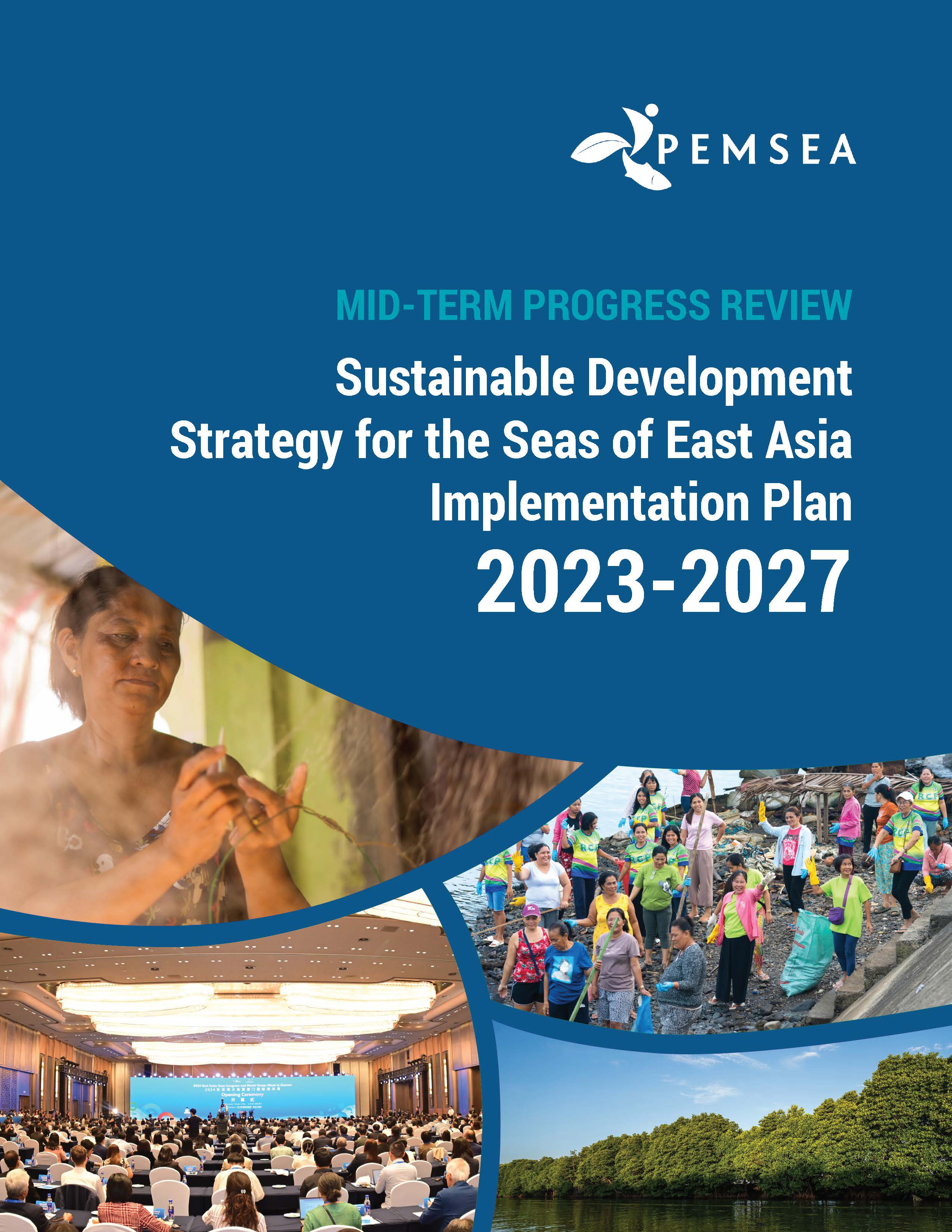
Mid-Term Progress Review of the PEMSEA SDS-SEA Implementation Plan 2023-2027
The Mid-Term Progress Review of the PEMSEA SDS-SEA Implementation Plan (IP) 2023-2027 is an evidence-based assessment covering 2023 to June 2025 that aims to evaluate implementation status, identify challenges, and inform the refinement of the plan toward 2030. The review covers key initiatives of PEMSEA Country and Non-Country Partners, networks, collaborators, and the PEMSEA Resource Facility (PRF), in line with the agreed targets of the SDS-SEA IP.Under Component 1 (Effective Governance), the review highlights the strengthening of PEMSEA’s regional mechanisms through increased voluntary contributions, delivery of various capacity-building initiatives, increasing alignment of PEMSEA Country Partners’ policies and programs with global sustainable and ocean-related commitments, and the increasing project portfolio under PRF management. Progress for Component 2 (Healthy Ocean) is characterized by the expansion of Integrated Coastal Management (ICM) along with other area-based integrated management approaches, the support of PRF-managed projects in biodiversity conservation, fisheries management, land-based and sea-based pollution reduction, waste management, and efforts related to disaster risk reduction and climate change adaptation including the launch of the PEMSEA Blue Carbon Program. Regarding Component 3 (Healthy People), the review emphasizes inclusive stakeholder engagement through the new GESI Action Plan and the success of localized sustainable livelihood programs through PRF-managed projects that have improved community resilience. Finally, for Component 4 (Healthy Economies), the review notes the increasing integration of blue economy principles into national strategies and the adoption of the 2024 Xiamen Declaration, which helps facilitate synergistic actions and sustainable blue financing and public-private partnerships.
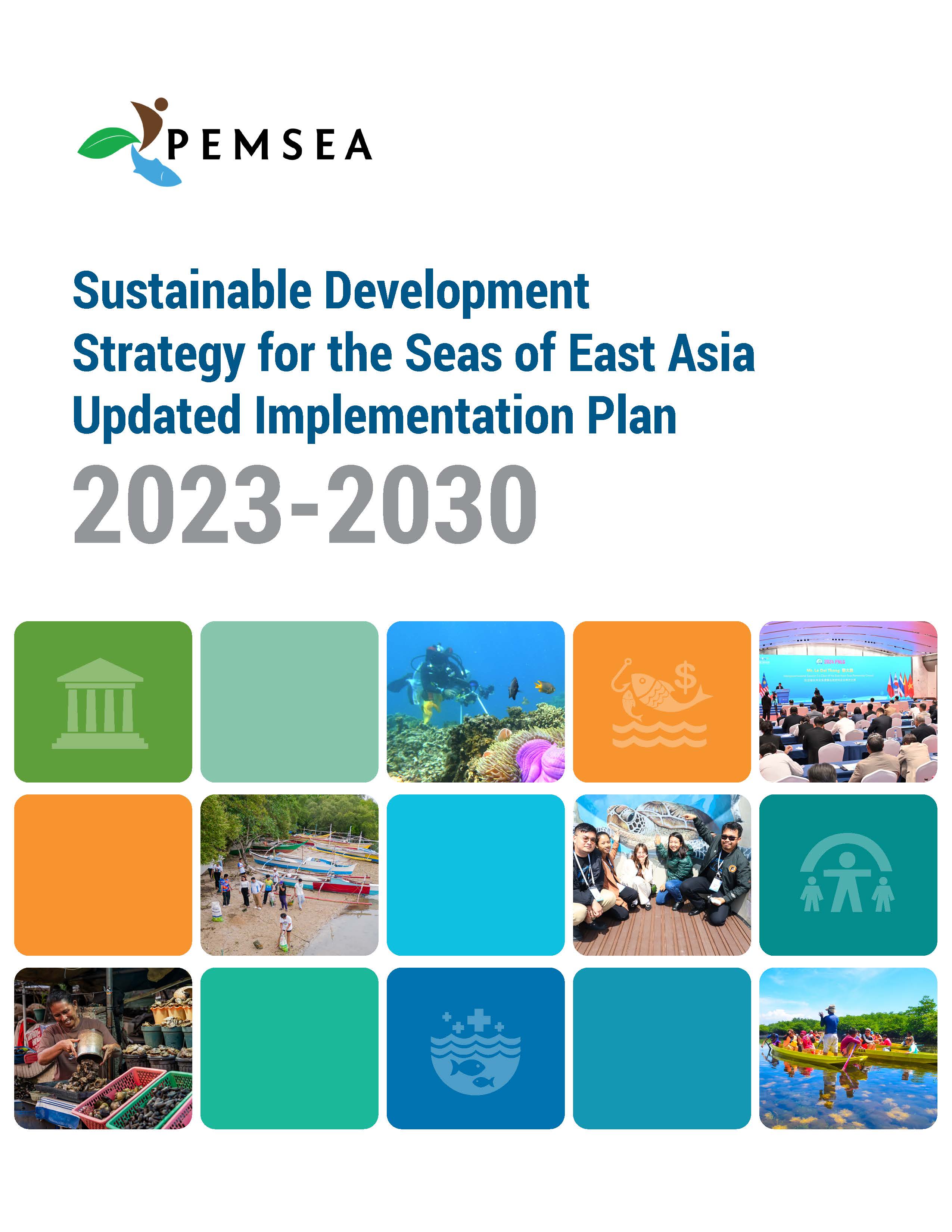
Sustainable Development Strategy for the Seas of East Asia (SDS-SEA) Implementation Plan 2023-2030
The Sustainable Development Strategy for the Seas of East Asia (SDS-SEA) Updated Implementation Plan 2023-2030 was established to extend the previous plan's timeframe to 2030, ensuring the continued relevance, effectiveness, and long-term sustainability of PEMSEA’s initiatives while enhancing organizational effectiveness, financial sustainability, and operational efficiency. The updating process was driven by several supporting efforts, including the mid-term progress review of the SDS-SEA IP 2023-2027, a review of status and trends in coastal and ocean governance, results from PEMSEA’s Organizational Capacity Assessment (OCA), and consultations with PEMSEA Country and Non-Country Partners. To bolster results-based management, the plan introduces a Strategy Map and Balanced Scorecard (BSC) as high-level tools for leadership to provide overall strategic direction across four key perspectives: Stakeholder Engagement, Programs and Processes, Learning and Growth, and Financial Sustainability. These high-level tools are supported by a detailed Strategic Results Framework (SRF), which guides operational implementation and performance tracking, with results from the SRF feeding upward to systematically inform the BSC and Strategy Map. Overall, the updated plan is focused on seven Strategic Objectives that are periodically monitored via a two-tiered system with support from various partners and networks, ensuring the plan remains fit for purpose and serves as a guide for adaptive management.